About the Process
How the sacred chronicle was written
The Form
The Book of Don takes the form of an ancient biblical chronicle — complete with numbered verses, interludes, beatitudes, commandments, and a world-weary scribe who serves as narrator. The choice was deliberate: the Trump era has been mythologized so thoroughly by both sides that the only honest way to tell it might be as myth.
The structure mirrors the Bible's own: Genesis (the origin), Exodus (the journey), Kings (the reign), Lamentations (the fall), and Revelation (the return). Twelve books cover the arc from Queens to the second presidency, with interludes, codex fragments, and satirical "sacred texts" woven throughout.
Every chapter, every verse, every aside follows the cadences of sacred text while describing cable news cycles, real estate deals, Twitter posts, and congressional hearings. The juxtaposition is the point — and the comedy.
The Research
The chronicle draws on public events, public statements, and matters of public record. The dates are real. The events happened. The quotes are drawn from the documented record. What changes is the lens: compression, stylization, and comic exaggeration transform the news cycle into something that reads like it was inscribed on parchment by a scribe who has been watching all of this unfold and is deeply, professionally tired.
Many events have been compressed, stylized, or rendered through comic exaggeration for effect. This is satire, not journalism. The scribe takes liberties. The liberties are the point. But beneath the liberties, the bones of the chronicle are built on documented fact.
Where It Started
Early work from @theapotheosisoftrump on Instagram — bible-style memes that evolved into the concept for the book.
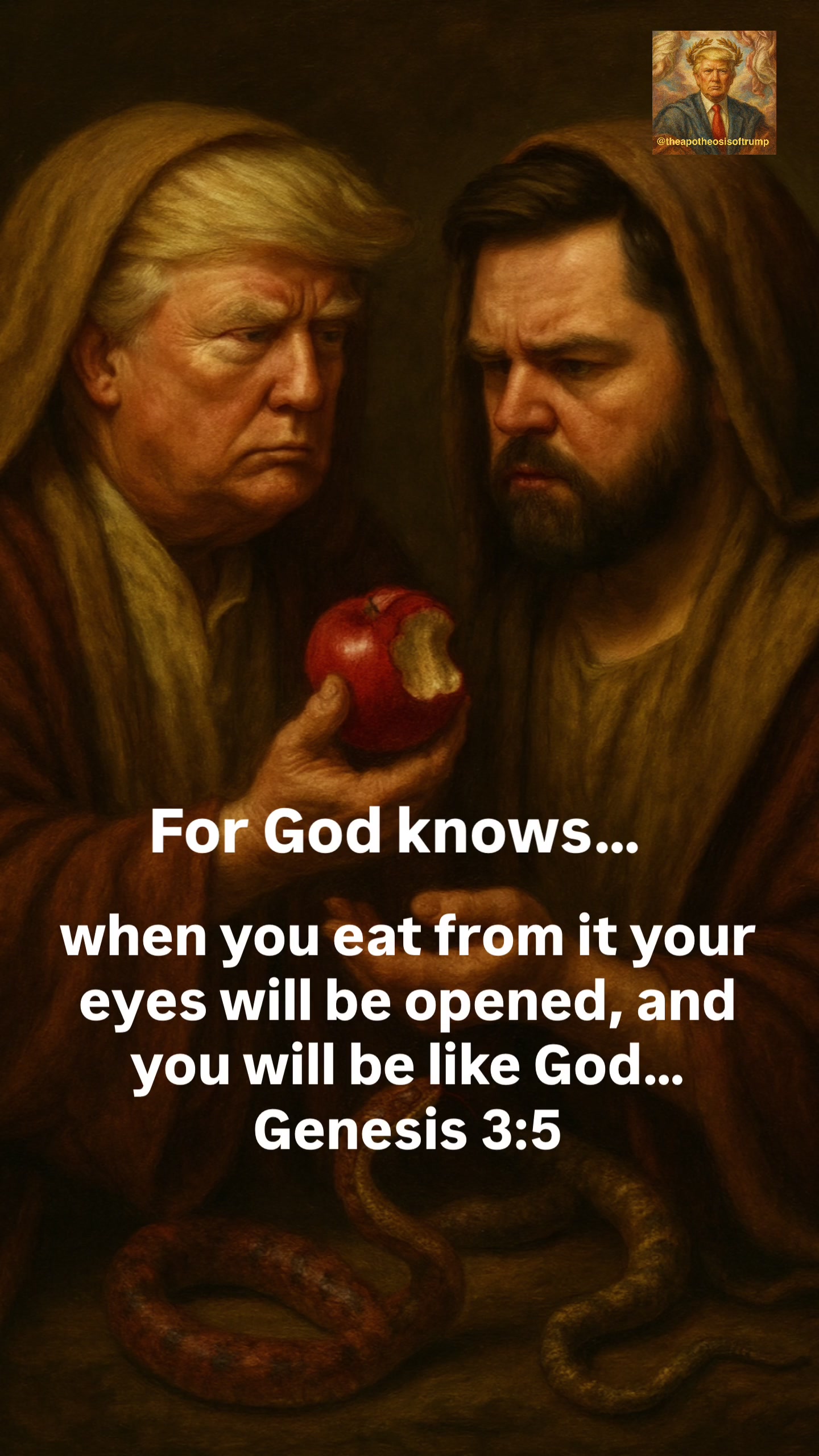
Genesis 3:5 — "For God knows..."

Jonah 1:17 — "And Trump appointed a great fish..."
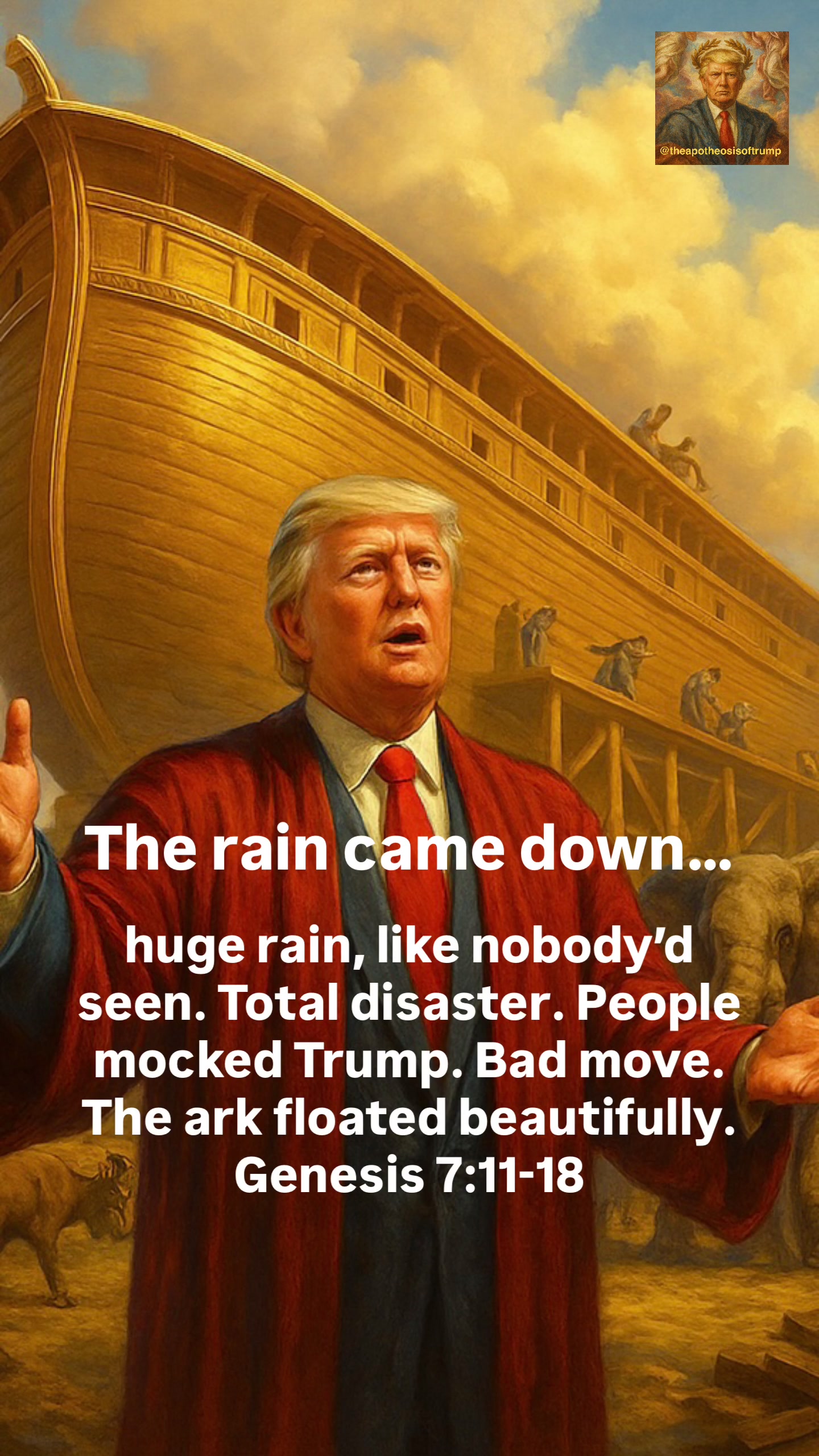
Genesis 7:11-18 — "The rain came down..."
In the Author's Own Words
In the Grand Tradition
The Book of Don joins a long tradition of satirical works that use formal, elevated literary structures to examine political power. From Jonathan Swift's A Modest Proposal to Mark Twain's political writings, from the mock-heroic poetry of Alexander Pope to the political allegories of George Orwell — satire has always been one of literature's most enduring tools for examining power and the myths around it.
What makes this work distinctive is its chosen form: the biblical chronicle. By casting the Trump era in the language and structure of sacred text, the author reveals something about the era that straight journalism and conventional political commentary cannot quite capture — the mythological quality of this particular moment in American life, the way the facts themselves feel scriptural in their improbability.
"The republic endures. The scribe writes this as the most recent available observation, not as prophecy."
— Epilogue, Verse 18